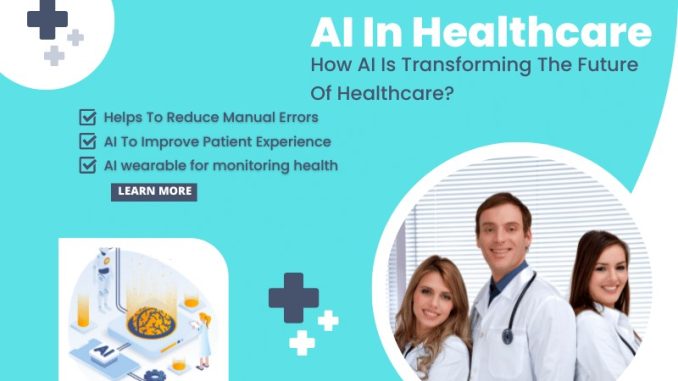
The healthcare industry stands on the precipice of a monumental transformation, driven significantly by the accelerating capabilities of Artificial Intelligence (AI). What was once the stuff of science fiction — machines diagnosing illnesses, predicting outbreaks, and personalizing treatments — is rapidly becoming a tangible reality. The future of AI-powered healthcare systems promises not just incremental improvements but a fundamental reshaping of how medical care is delivered, accessed, and experienced by billions worldwide. This shift holds the potential to address some of healthcare’s most pressing challenges, from spiraling costs and workforce shortages to diagnostic inaccuracies and the need for more personalized interventions.
One of the most profound impacts of AI in healthcare will be in **precision medicine and personalized treatment plans**. Current medical practice often relies on a “one-size-fits-all” approach, where treatments are standardized for populations. However, AI can analyze vast datasets, including an individual’s genetic makeup, lifestyle choices, environmental factors, medical history, and real-time biometric data from wearables. By synthesizing this complex information, AI algorithms can identify unique patterns and predispositions, allowing for highly tailored treatment protocols. Imagine an AI creating a bespoke drug regimen for a cancer patient, predicting how they will respond to different therapies based on their specific tumor genomics and past patient outcomes. This hyper-personalization promises not only more effective treatments but also reduced adverse reactions and wasted resources on ineffective therapies.
**Diagnostic accuracy and speed** are set to be revolutionized by AI. Medical imaging interpretation, often a time-consuming and labor-intensive task for human radiologists and pathologists, is already being augmented by AI. Deep learning algorithms can analyze X-rays, MRIs, CT scans, and pathology slides with incredible speed and often greater precision than the human eye, identifying subtle anomalies that might otherwise be missed. For instance, AI can detect early signs of diseases like cancer, diabetic retinopathy, or neurological disorders years before symptoms manifest. This early detection is critical for improving patient outcomes, as timely intervention often leads to more successful treatment. AI’s ability to cross-reference patient symptoms and medical history with vast databases of clinical knowledge and research can also provide clinicians with instant “second opinions” and assist in differential diagnoses, especially for rare or complex conditions.
The administrative burden on healthcare professionals is a significant contributor to burnout and inefficiency. AI is poised to dramatically **streamline administrative and operational workflows**. Tasks such as medical coding, clinical documentation, appointment scheduling, insurance claims processing, and even inventory management within hospitals can be largely automated by AI-powered systems. Natural Language Processing (NLP) allows AI to understand and summarize clinical notes, discharge summaries, and patient conversations, automatically populating electronic health records and generating billing codes. This frees up doctors, nurses, and administrative staff from tedious, repetitive tasks, allowing them to dedicate more time and energy to direct patient care and critical decision-making. The sheer volume of time saved across a large healthcare system could translate into hundreds of thousands of hours annually, significantly enhancing efficiency and reducing operational costs.
**Drug discovery and development** are notoriously expensive, time-consuming, and prone to high failure rates. AI is accelerating this process by rapidly sifting through molecular compounds, predicting drug efficacy and toxicity, and identifying potential drug targets with unprecedented speed. Machine learning can analyze vast chemical libraries and biological data to suggest novel compounds, simulate their interactions with biological systems, and even optimize their synthesis. This drastically reduces the time and resources needed for early-stage research and preclinical trials, bringing potentially life-saving medications to patients much faster. AI also optimizes clinical trial design, identifying ideal patient cohorts and predicting trial outcomes, further enhancing efficiency in the development pipeline.
Remote patient monitoring and **proactive care** will become the norm thanks to AI integrated with wearable technology and IoT devices. Patients with chronic conditions can be continuously monitored, with AI systems detecting early signs of deterioration or deviations from personalized health baselines. Alerts can be sent to both patients and healthcare providers, enabling timely interventions that prevent acute episodes or hospital readmissions. AI-powered virtual health assistants and chatbots can provide round-the-clock support, answering patient queries, offering medication reminders, and providing personalized health coaching, thereby empowering individuals to manage their health more effectively from the comfort of their homes. This shift from reactive, episodic care to proactive, continuous health management promises healthier populations and a reduced strain on acute care facilities.
Despite the immense opportunities, the future of AI in healthcare systems is not without its significant challenges. **Data privacy and security** are paramount, given the highly sensitive nature of patient information. Robust cybersecurity measures and strict adherence to regulations like GDPR and HIPAA will be essential. The potential for **algorithmic bias** is another critical concern; if AI models are trained on unrepresentative or biased datasets, they could perpetuate or even amplify existing health disparities. Ensuring fairness, transparency, and explainability in AI’s decision-making processes will require rigorous ethical frameworks and continuous auditing. Finally, the **integration of AI into existing, often complex and siloed, healthcare IT infrastructures** presents a formidable technical and logistical hurdle. Furthermore, healthcare professionals will require significant training and upskilling to effectively collaborate with AI tools, viewing them as intelligent co-pilots rather than replacements.
In conclusion, the trajectory of AI in healthcare systems points towards a future that is more personalized, precise, efficient, and accessible. AI’s ability to process complex data, enhance diagnostics, automate administrative tasks, accelerate drug discovery, and enable proactive care promises to fundamentally transform medicine as we know it. While careful navigation of ethical considerations, data governance, and integration challenges is crucial, the potential for AI to dramatically improve patient outcomes, reduce healthcare costs, and alleviate the burden on healthcare professionals is undeniably immense, heralding a new era of intelligent, patient-centric healthcare.