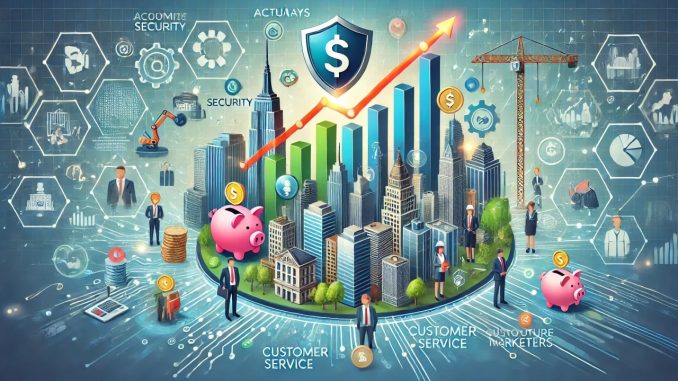
Insurance plays a crucial role in shaping economic stability, even though its influence is often subtle and not immediately visible. At its core, insurance is a mechanism for managing risk, and by spreading that risk across individuals, businesses, and institutions, it creates a foundation of resilience that supports broader economic systems. Without insurance, the financial consequences of accidents, disasters, or unforeseen events would fall entirely on those directly affected, often leading to devastating losses. With insurance, those risks are absorbed and redistributed, allowing economies to recover more quickly and maintain momentum.
One of the most significant ways insurance impacts economic stability is by enabling businesses to operate with confidence. Companies face countless uncertainties, from supply chain disruptions to liability claims, and insurance provides a safety net that allows them to take calculated risks. This assurance encourages investment, innovation, and expansion, all of which contribute to economic growth. When businesses know they are protected against catastrophic losses, they are more willing to pursue opportunities that drive productivity and create jobs.
Insurance also plays a vital role in protecting individuals, which in turn supports economic stability at a societal level. Health coverage ensures that people can access medical care without facing financial ruin, while property insurance allows families to recover from accidents or natural disasters. By preventing personal financial crises from spiraling into broader economic problems, insurance helps maintain consumer confidence and spending power. This stability in household finances translates into steadier demand for goods and services, which sustains businesses and keeps economies functioning smoothly.
The impact of insurance becomes especially clear in times of crisis. Natural disasters, pandemics, and large-scale accidents can cause widespread disruption, but insurance provides the resources needed for recovery. Payouts help rebuild homes, restore businesses, and repair infrastructure, reducing the burden on governments and communities. This ability to mobilize financial support quickly ensures that economies can bounce back rather than languish in prolonged downturns. In this way, insurance acts as a stabilizing force, cushioning the blow of shocks that might otherwise destabilize entire regions.
Insurance also contributes to economic stability by fostering trust. Consumers, employees, and investors all feel more secure when they know protections are in place. A company with comprehensive coverage signals responsibility and foresight, which strengthens relationships with stakeholders. Similarly, individuals who carry insurance demonstrate prudence in managing their lives, which builds confidence in financial systems. This trust is an intangible but powerful factor in economic stability, as it encourages participation in markets and reduces fear of catastrophic loss.
Financial markets themselves benefit from the presence of insurance. Insurers invest premiums in bonds, equities, and other assets, providing liquidity and stability to capital markets. These investments support infrastructure projects, corporate growth, and government financing, creating a cycle in which insurance not only protects against risk but also fuels economic development. The steady flow of capital from insurance companies into markets helps balance volatility and ensures that resources are available for long-term growth.
Insurance also plays a role in encouraging responsible behavior. By linking premiums to risk levels, insurers incentivize individuals and businesses to adopt safer practices. Drivers who maintain clean records pay less for auto coverage, while companies that invest in safety measures reduce liability costs. This alignment of financial incentives with risk management contributes to overall economic stability by reducing the frequency and severity of losses. In effect, insurance not only absorbs risk but also helps prevent it.
The adaptability of insurance is another factor in its economic impact. As new risks emerge, such as cyber threats or climate change, insurers develop products to address them. This evolution ensures that economies remain resilient in the face of changing circumstances. By providing coverage for emerging risks, insurance allows businesses and individuals to navigate new challenges without being paralyzed by uncertainty. This adaptability reinforces stability by ensuring that protection remains relevant and effective.
Insurance also reduces the burden on governments during crises. When disasters strike, insured individuals and businesses receive payouts that help them recover, reducing the need for extensive public assistance. This allows governments to allocate resources more efficiently and maintain fiscal stability. By complementing public safety nets, insurance strengthens the overall resilience of economies and prevents shocks from overwhelming state budgets.
The psychological dimension of insurance should not be overlooked. Knowing that coverage exists provides peace of mind, which influences economic behavior. People are more willing to invest, spend, and take risks when they feel protected. This confidence fuels economic activity, creating a virtuous cycle in which insurance supports growth by reducing fear of loss. The quiet reassurance of insurance is a stabilizing force that underpins countless decisions in daily life and business.
Insurance also reflects and reinforces social stability. Communities recover more quickly from disasters when insurance payouts help rebuild homes and businesses. This collective resilience ensures that economic activity resumes sooner, preventing prolonged disruptions. By supporting recovery at both individual and community levels, insurance strengthens the social fabric that underpins economic systems. Stability in communities translates into stability in economies, highlighting the interconnected nature of insurance’s impact.
Ultimately, insurance is a silent but powerful driver of economic stability. It absorbs shocks, redistributes risk, and provides the resources needed for recovery. It fosters trust, encourages responsible behavior, and fuels financial markets through investment. By protecting individuals, businesses, and communities, insurance ensures that economies can withstand uncertainty and continue to grow. Its influence may not always be visible, but it is woven into the fabric of modern life, quietly sustaining the resilience that makes economic stability possible.
As the world becomes more complex and risks evolve, the importance of insurance will only increase. Economies will continue to rely on its ability to manage uncertainty, mobilize resources, and foster confidence. In this way, insurance remains not just a financial product but a cornerstone of economic stability, enabling societies to thrive even in the face of unpredictability.