Artificial intelligence has become the cornerstone of autonomous vehicle technology, enabling machines to perform tasks that once required human judgment, reflexes, and experience. At the heart of this transformation is the ability of AI systems to perceive their environment, make decisions in real time, and learn from vast amounts of data. These capabilities are not just theoretical—they’re actively shaping the future of transportation, logistics, and urban mobility. For businesses invested in automotive innovation or dependent on fleet operations, understanding how AI powers autonomous vehicles is essential to navigating the next wave of disruption.
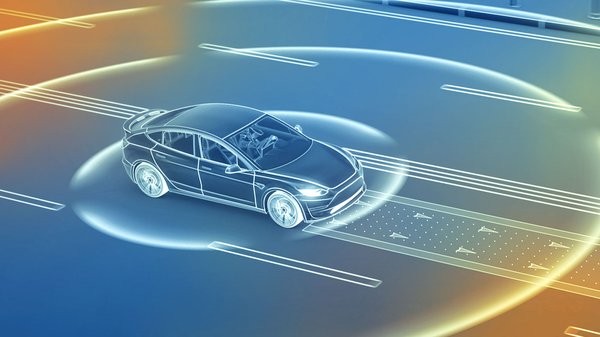
The process begins with perception. Autonomous vehicles rely on a suite of sensors—cameras, radar, lidar, and ultrasonic devices—to gather information about their surroundings. AI algorithms process this raw data to identify objects such as pedestrians, other vehicles, traffic signs, and lane markings. This isn’t a simple task of recognition; it involves interpreting context. For example, a pedestrian standing on the curb might be waiting to cross, while another walking parallel to the road poses no immediate concern. AI must distinguish between these scenarios and predict behavior, often within milliseconds. This level of situational awareness is what allows autonomous systems to operate safely and efficiently in complex environments.
Once the vehicle understands its surroundings, the next challenge is decision-making. AI models, particularly those based on deep learning and reinforcement learning, evaluate countless variables to determine the best course of action. Should the car slow down, change lanes, or come to a full stop? These decisions are influenced by traffic laws, road conditions, and dynamic elements like the movement of nearby vehicles. Unlike traditional rule-based systems, AI can adapt to new situations by learning from experience. This is especially important in urban settings, where unpredictability is the norm. A delivery robot navigating a crowded street or a self-driving taxi maneuvering through rush hour traffic must be able to respond to novel challenges without human intervention.
Planning and control are equally critical. AI helps autonomous vehicles chart a path from point A to point B while avoiding obstacles and optimizing for efficiency. This involves not just route selection but also real-time adjustments based on changing conditions. For instance, if a road is unexpectedly closed or traffic congestion spikes, the system must reroute without compromising safety or timing. These capabilities are powered by algorithms that integrate mapping data, sensor input, and predictive models. In commercial applications, such as autonomous trucking, this level of precision can translate into significant cost savings and improved delivery reliability.
Training these AI systems requires enormous amounts of data. Autonomous vehicles generate terabytes of information during operation, which is then used to refine models and improve performance. Simulations play a key role in this process, allowing developers to test scenarios that are rare or dangerous in the real world. A company might simulate a child running into the street or a sudden downpour that obscures visibility, ensuring the vehicle can handle such events before they occur in reality. This iterative learning process is what makes AI in autonomous vehicles so powerful—it’s not static, but continuously evolving.
Safety remains a central concern, and AI contributes in multiple ways. Beyond basic navigation, AI systems monitor the health of the vehicle itself, detecting mechanical issues or anomalies in sensor data. They also support redundancy, meaning that if one system fails, another can take over. This layered approach is essential for building trust in autonomous technology, especially in industries where reliability is non-negotiable. For example, in autonomous mining operations, vehicles must operate in harsh conditions with minimal oversight. AI ensures that these machines can function consistently, reducing risk and enhancing productivity.
The integration of AI into autonomous vehicles also opens new possibilities for personalization and user experience. Vehicles can learn driver preferences, adjust climate controls, and even suggest routes based on past behavior. In shared mobility services, AI can optimize ride matching, predict demand, and manage fleet distribution. These enhancements are not just conveniences—they’re strategic differentiators in a competitive market. Companies that leverage AI to deliver smarter, more responsive services are better positioned to capture customer loyalty and scale efficiently.
Regulatory and ethical considerations are increasingly part of the conversation. As AI takes on more responsibility in autonomous vehicles, questions arise about accountability, transparency, and fairness. Who is liable in the event of an accident? How do we ensure that AI decisions are unbiased and equitable? Businesses must engage with these issues proactively, working with policymakers, researchers, and communities to shape standards that reflect both technological capability and societal values. This is not just about compliance—it’s about leadership in a space that touches lives and livelihoods.
In the broader context of mobility, AI in autonomous vehicles represents a shift from reactive to proactive systems. Instead of responding to inputs in isolation, these vehicles anticipate and adapt, creating a more fluid and intelligent transportation network. For logistics companies, this means fewer delays and better asset utilization. For urban planners, it offers tools to reduce congestion and improve safety. And for consumers, it promises a future where travel is not only more convenient but also more sustainable.
The journey toward fully autonomous vehicles is still unfolding, but AI is undeniably the engine driving it forward. Its ability to perceive, decide, and learn makes it uniquely suited to tackle the complexities of real-world driving. As businesses explore opportunities in this space, the focus should not only be on what AI can do today, but on how it will continue to evolve. The road ahead is challenging, but with AI at the helm, it’s also full of possibility.